
About
Why Mesa exists
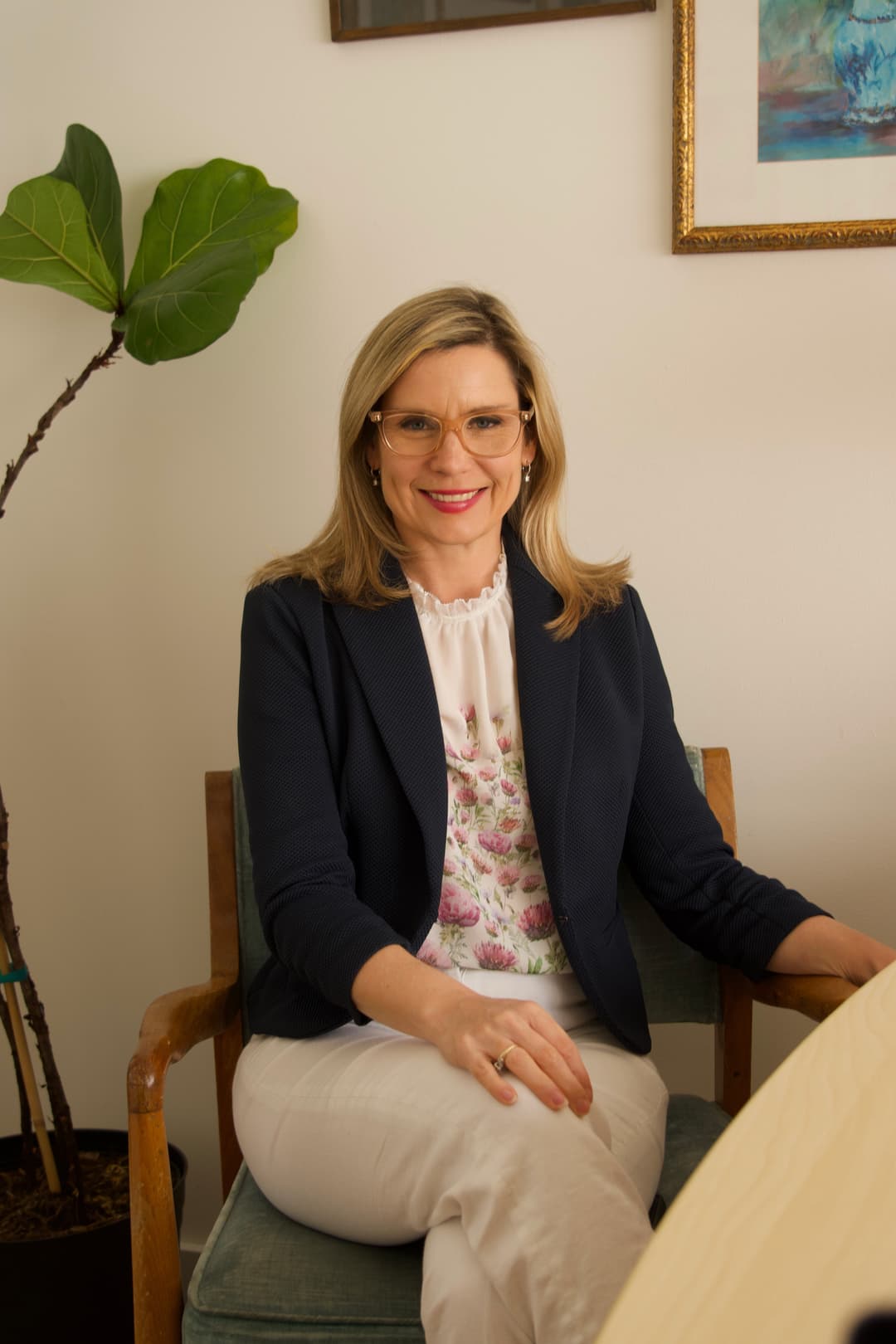
I’ve spent my career on both sides of a relationship that doesn’t work as well as it should: the one between big enterprises and the startups trying to sell into them. Mesa Capital Partners exists to close that gap — starting with research, because right now, in the middle of the most confusing technology shift I’ve seen since I started, no one has good evidence for what’s actually happening.
I started my career over twenty years ago in Australia, as a market analyst covering infrastructure management, systems management, network management, storage software, and the earliest cybersecurity software — mostly antivirus, a handful of firewall vendors, and business continuity — back before cloud existed. I was an award-winning analyst. Years later I earned an MBA and became a consulting director across software markets in EMEA. I’ve lived in Sydney, in France, and across Asia-Pacific and Europe. I’m American, and I came to Silicon Valley when my son was born.
For years after that I worked mostly in marketing roles — but my heart was always in strategy and innovation, and I kept getting pulled into chief architect meetings at the software companies I worked for, running product marketing across their entire portfolios. Like a lot of women in enterprise tech at the time, it took longer than it should have to get the seat those meetings implied I’d already earned. That changed when a former IDC leader recruited me to build and run NTT’s Global Innovation Center — the bridge between NTT’s global corporation, its 900 operating companies, Japan, and Silicon Valley.
That job put me inside the actual machinery of enterprise innovation: how corporations, venture capital firms, and the CIOs, CTOs, CISOs, and Chief AI Officers who run the world’s largest companies work with startups to adopt new technology. I hosted 10,000 senior leaders across more than 200 events, council meetings, summits, and day-long agendas. And I watched the same gap show up again and again: enormous R&D and M&A activity happening inside big corporations, and a Silicon Valley venture ecosystem that mostly deals with itself — venture-backed startups selling to other venture-backed startups, moving through their early stages together, until the good deals get swept up and everyone else is left chasing. Founders routinely talk to a hundred investors before they get funded. The direct line between enterprises and the startups who need them is broken.
When the Innovation Center closed, a board member invited me to start a venture studio. I realized fairly quickly that a venture studio built for one corporation was the wrong shape for the problem — strategic corporate VC struggles precisely because deal evaluation is slow, and by the time a big company decides, Silicon Valley has already moved on. What’s actually needed is what I’d already built at NTT: an analyst function, a venture studio, strategic corporate venture capital, and a community platform, combined — independent of any single corporation.
So I’m going back to where I started: market research. This is one of the most confusing times I’ve experienced since I began as an analyst — boards and executive teams are trying to figure out how to use AI safely, competitively, and in production, against a backdrop of real governance and security concerns and no shortage of apocalyptic headlines. Mesa’s job is to go find out, directly from the people making these decisions, what’s actually happening — and build the research, the community, and eventually the capital vehicle that closes the gap I’ve spent a career watching.
Our approach
Every finding traces back to a named research stage: founding interviews, a piloted survey, a first quantitative wave, and repeat interviews that track what changed. We interview people whose projects succeeded, stalled, and were rejected — successful implementations help distinguish unavoidable constraints from problems caused by particular conditions. We publish our recruitment methods, question wording, sample sizes, and limitations, and we don’t present a convenience sample as if it carried a formal margin of error. Our methodology follows AAPOR’s survey and disclosure standards.
Editorial independence
Findings are not for sale. Client work never buys favorable results, access to Council members’ contact details, or implied endorsement of any product or company.
One more thing, in the interest of transparency: we’re studying how enterprises build and adopt AI, so we’re building this way too. This site and research platform are built using Claude — Mesa is practicing, from day one, the kind of AI-native operation we’re here to study.
Our team
Megan Dahlgren
Founder & Managing Partner
- 25+ years in enterprise infrastructure
- Former IDC analyst, infrastructure management and cybersecurity
- Led NTT's Silicon Valley Global Innovation Center in San Francisco
- Built NTT's CTO Operator Council of senior industrial technology executives
- Author of the What Breaks Next research series
- Advisor to AI infrastructure, robotics and security startups
Chuck Ginocchio
Advisory Partner
- Former CTO at Georgia-Pacific and Koch Industries
- Brings the buyer's view: how an enterprise actually evaluates, pilots and scales infrastructure